Majored in Doctorate In Business Administration Georgia State University, Class of 2022
From Washington, DC
Dr. Charleata Battle is an Assistant Professor of Management and Healthcare Management at California State University, Los Angeles. She brings more than 26 years of cross-sector professional experience spanning healthcare, higher education, business, information technology, entrepreneurship, and organizational leadership. Dr. Battle maintains an interdisciplinary research agenda bridging healthcare management, management education, public health, leadership, innovation, and societal impact. Her scholarship examines healthcare leadership, competency-based healthcare management education, experiential learning, healthcare innovation, physician entrepreneurship, workforce development, and community-engaged research methodologies. Her work has appeared in journals and conference proceedings related to healthcare management, public health, management education, and organizational leadership.
She is the recipient of the 20252026 College of Business and Economics Societal Impact Grant (Phase One) for the research project, Greater Los Angeles Photovoice for Healthcare, and the 20262027 RSCA Competition Minigrant for the project, Evaluating the ACHE Competency Assessment Tool (CAT) for Health Administration Curriculum Enhancement. Her current research integrates participatory and qualitative methodologies, including photovoice, narrative inquiry, and reflective thematic analysis, to examine healthcare leadership development, competency assessment, and community-informed approaches to management education.
In 2026, Dr. Battle published Indefinite Useful Life: Leadership Forged Without an Expiration Date, which explores leadership development through resilience, identity, and lived experience. Her peer-reviewed scholarship includes research related to healthcare leadership, societal impact in business education, prenatal care disparities, healthcare innovation, entrepreneurship, and experiential learning in graduate healthcare administration education. Her scholarship contributes to emerging conversations surrounding healthcare workforce development, entrepreneurial leadership in healthcare, and societal impact within management education. In 2014, Dr. Battle founded Char Battle, Inc., where she advises healthcare businesses and medical entrepreneurs on organizational strategy, operations, innovation, and sustainable growth.
At Cal State LA, Dr. Battle teaches graduate and undergraduate courses in healthcare strategy, leadership, management, and organizational effectiveness. She has supervised more than 80 graduate capstone research projects and contributes to initiatives supporting accreditation, assurance of learning, graduate education, student success, and shared governance. From Spring 2023 through Spring 2026, she served as the College of Business and Economics Academic Senator.
In 2025, Dr. Battle was appointed to the Board of Directors for the Georgia State University Alumni Association. In 2026, she was appointed Chair of Academic Affairs for the Southern California Chapter of the American College of Healthcare Executives. She maintains active involvement in several professional organizations, including the Academy of Management, Association of University Programs in Health Administration, American Public Health Association, and the International Epidemiological Association. She also contributes to the field as a journal and conference reviewer. In 2025, Dr. Battle was appointed as a Baldrige Examiner for the Malcolm Baldrige National Quality Award through the National Institute of Standards and Technology, U.S. Department of Commerce. Dr. Battle earned a B.B.A., MBA, and Doctor of Business Administration from the Georgia State University J. Mack Robinson College of Business.
Charleata Battle of Los Angeles earned a Doctor of Business Administration degree from Georgia State University during the spring 2022 semester. More than 4,000 students graduated from Georgia Sta...
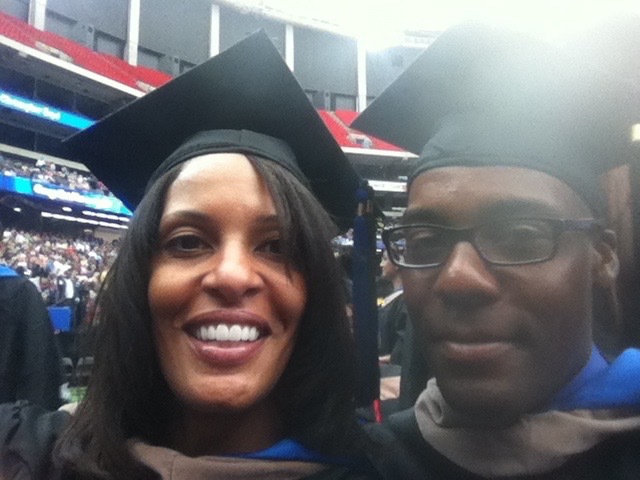
Charleata Battle, DBA, MBA was recognized for graduating
Doctor in Business Administration (DBA). Graduate of the 3-year, cohort-based, doctoral degree program designed for senior-level decision-makers. By completing the degree program, I have demonstrated the ability to apply research methodology and business theory to practical problems, and to develop new perspectives on leadership, global change, and decision making.
This graduation mission is accomplished by helping executives develop general competence in applied research (including demonstrating knowledge of relevant theory and scholarly literature) while creating new knowledge on contemporary business problems through rigorous, hands-on coursework as well as the writing and defense of a dissertation.
Fall 2019 - Spring 2022 -
Added by Charleata
Charleata Battle, DBA, MBA was recognized for studying abroad
Participated in a two week summer study abroad immersion program and earned an additional six (6) credit hours while completing the Master of Business Administration degree program at Georgia State University, J. Mack Robinson College of Business.
The aims and my takeaways from the study abroad included new international experiences, discovery and access to new and different business environments and models across a variety of industries.
Summer 2011 -
Added by Charleata
Charleata Battle, DBA, MBA was recognized for graduating
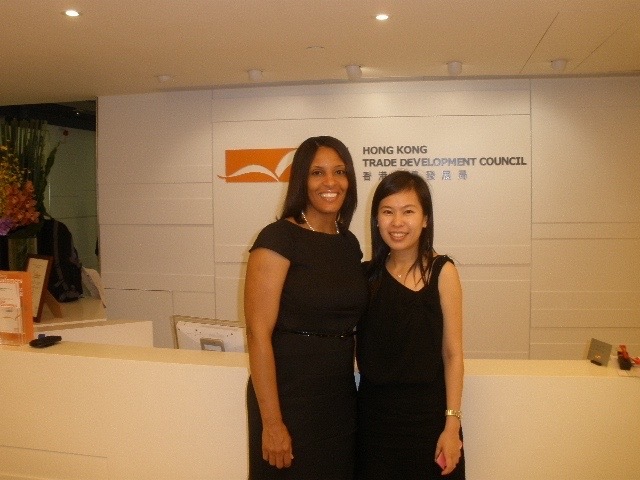
Master of Business Administration (MBA). Graduate of the two-year, cohort based program designed for professionals. Coursework involved concentrations in management and international business with emphasis on China. I participated in a study abroad program in Hong Kong SAR and Schenzen, Suzhou, and Bejing, China.
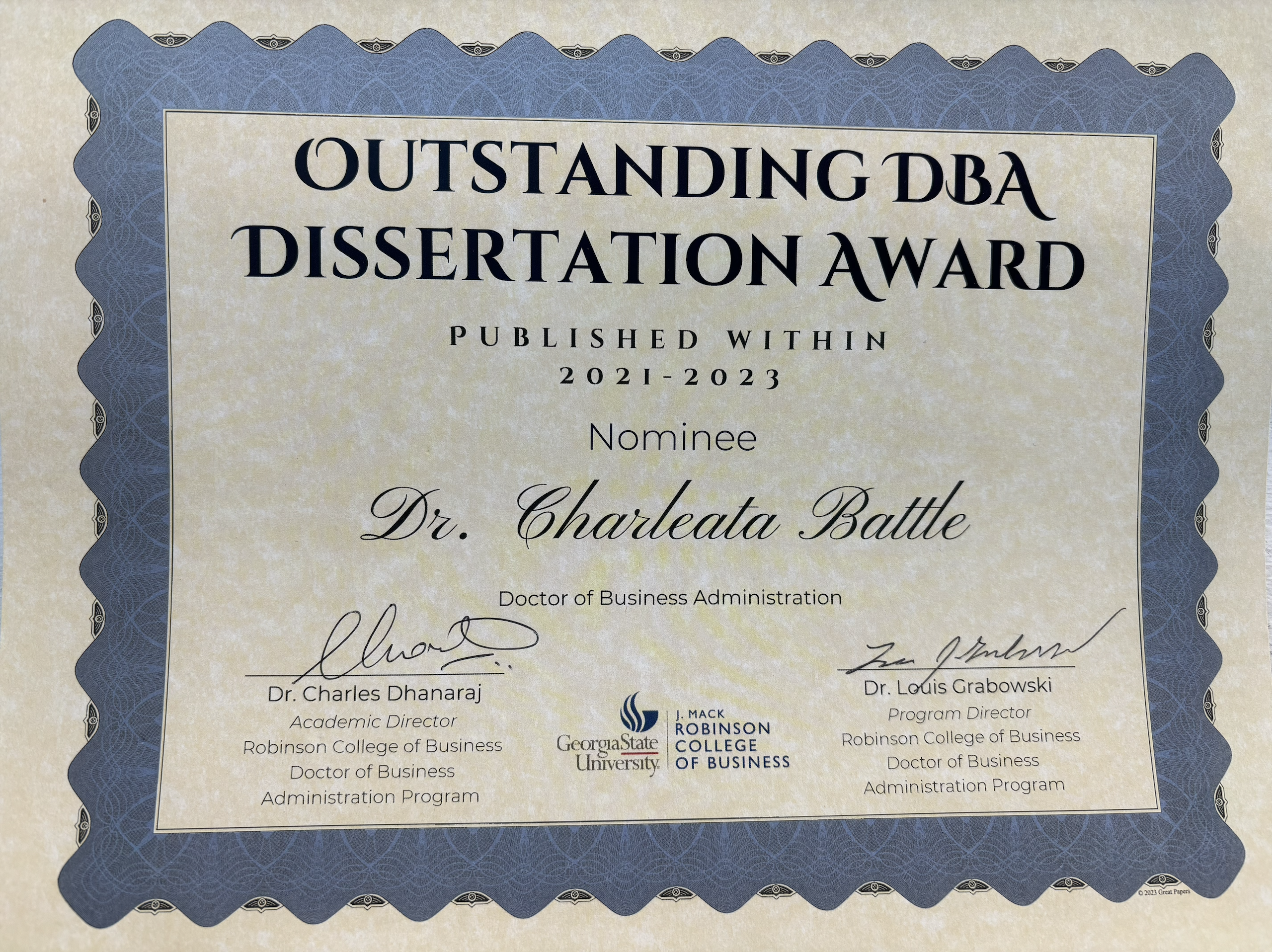
Charleata Battle, DBA, MBA was recognized for an accomplishment
Selected as one of the top 10 finalists for consideration in the 2024 Georgia State University DBA Impact XV, competing for the esteemed Outstanding DBA Dissertation Award, recognizing dissertations published between 2021 and 2023.
Added by Charleata
World Affairs Council of Atlanta
A stakeholder and member of a community and network of faculty, students, researchers, community leaders, and concerned citizens who discuss current issues to bring people together.
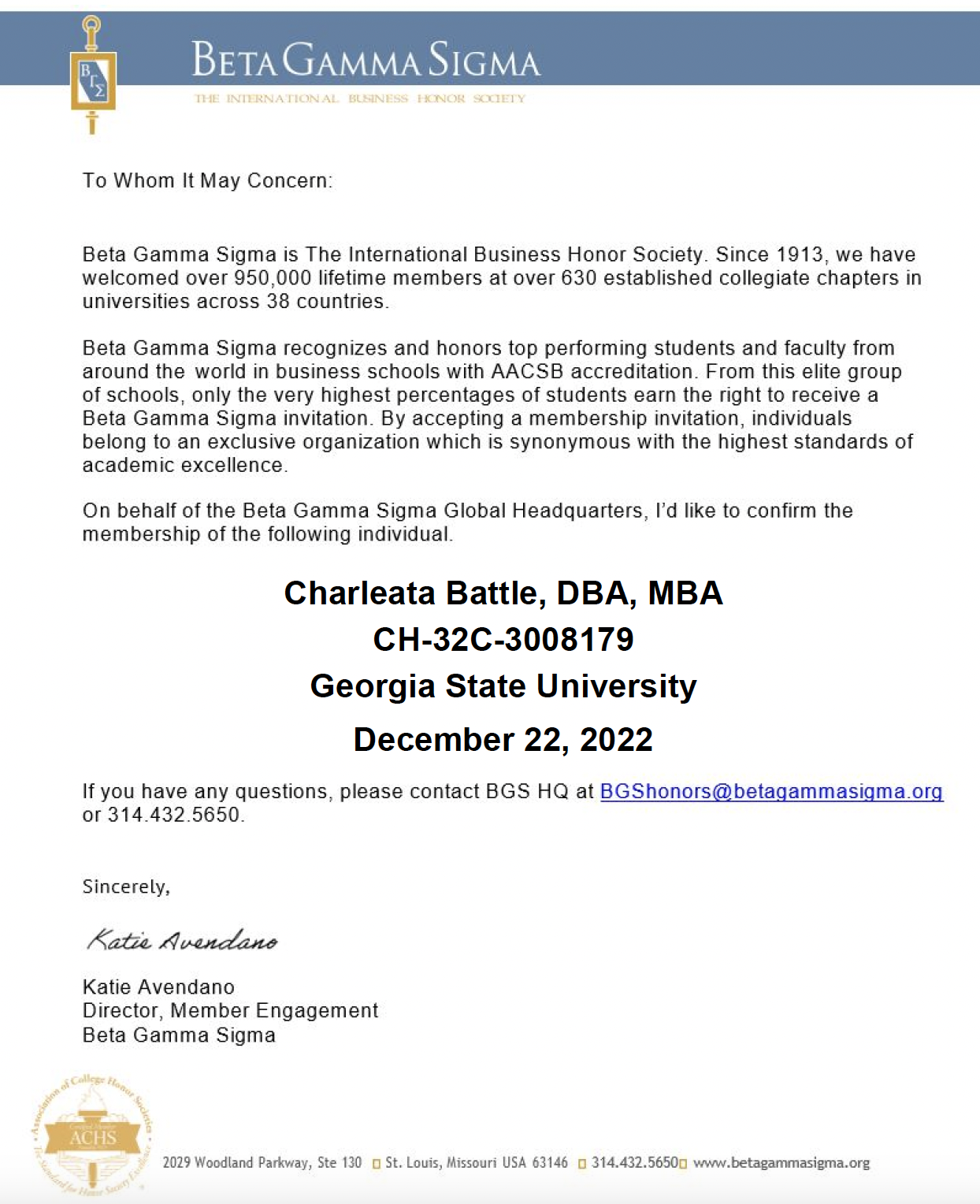
Founded in 1913, Beta Gamma Sigma is the international business honor society for AACSB-accredited schools, which are the top 5% of business school programs around the world. Inducted as students, BGS members go on to serve in critical leadership roles in corporate, entrepreneurial, government, non-profit, and academic sectors. Members currently reside in all 50 U. S. states and more than 190 countries. Notable members include Nobel Prize winners, Olympians, inventors, CEOs of major global companies and nonprofit organizations, deans of the top business schools, and others who are making the world a better place at all levels of contribution through social enterprise, service, and leadership. Beta Gamma Sigma is a proud member of the Association of College Honor Societies (ACHS).
Assistant Professor Management, Healthcare Management at California State University, Los Angeles
Demonstrated engaged-scholarship research and developed learning-relationships as a management and healthcare management faculty member. Instructed graduate students enrolled in the Master of Healthcare Management (MS HCM) and Master of Business Administration (MBA) programs within the College of Business and Economics.
December 2021 - Present
Director, Information Technology, Customer Service at Morehouse School of Medicine
Directed the academic medical center's 10-person ITIL customer services team, oversaw the infrastructure and flow of technical operations, purchased agency-wide information technology products and services. Managed and directed campus-wide information technology including the development and implementation processes of information technology systems, hardware, and software for the academic medical center and five (5) ambulatory clinic locations. Directed technology compliance reporting for Accountable Care Organizations (ACOs).
January 2018 - April 2021
Information Technology Operations Manager at Housing Authority of the City of Atlanta
Reporting directly to the Chief Information Officer, acted as process owner for agency-wide IT operations, controls processes, infrastructure, and IT client services. Oversaw technology network infrastructure and systems functionality. Provided input into technology governance, IT projects, strategy, and organization-wide IT procurements. Co-created RFP's, draft resolutions, and presentations of information technology procurement documents to the Board for approval.
Senior Business Solutions Analyst at Housing Authority of the City of Atlanta
Provided organization-wide data analysis and business processes analysis to identify opportunities and strategies. Made recommendations for internal software development Agile Scrum and Kanban frameworks to improve and execute company-wide strategies desired results through technology-enabled solutions. Coordinated external software purchases, implementation, and deployment to improve business efficiency. Collaborated with project managers, software development teams, and other agency stakeholders to deliver timely and effective technology solutions.
April 2015 - April 2016
Founder & Chief Executive Officer at Char Battle, Incorporated
Founded and led the firm's mission of which is to develop sustained business solutions for small businesses and entrepreneurs by providing wide-ranging business services and consultation. Apply a breadth of knowledge and client solutions that include research, education, and the applications of healthcare technology including but not limited to Agile Scrum, Kanban, and Lean Six Sigma frameworks.
September 2014 - Present
Program Development Officer at Georgia State University
Created employee engagement programs, ethics training, and other activities designed to build relationships between Georgia State University and its employee stakeholders. Presented in-person employee onboarding training that included conflicts of interest, ethics, diversity & inclusion, and information technology training.
Co-developed language and cultural engagement programs including study abroad trips to China for students enrolled in Mandarin at Georgia State University, College of Arts and Sciences. Co-directed budget, training programs, and international conferences.
March 2011 - August 2014
Founder, Broker, & Real Estate Instructor at Chandler Scott International
Created a real estate firm from an idea into a boutique residential and commercial real estate firm specializing in new construction builds. Taught real estate pre-license, post-license, and continuing education courses for Georgia Real Estate Institute, Metro Brokers, Barney Fletcher Schools, and The Real Estate School.
Purpose
Although the revised AACSB’s Standard 9 provides a strategic direction, limited research has been conducted on operationalizing its integration into business schools. To address this gap, we defined and evaluated a framework to explicate societal impact through specific inputs, activities, outputs and outcomes at the organizational, student and faculty levels.
Design/methodology/approach
The study used a mixed-method approach. The data include quantitative and qualitative survey responses from nonprofit executives, which were analyzed using hypothesis testing. The qualitative responses from students were analyzed using natural language processing (NLP), and faculty evaluations used a standardized rubric.
Findings
The adopted model used in this research effectively measured the societal impact of Sustainable development goal (SDG) 8. Three key findings include: (1) Nonprofit executives reported contributions to their project success rate and enhanced decision-making processes. (2) The evaluation of student perceptions showed growth in career readiness competencies. (3) Faculty assessments indicated strengthened connections between academic preparation and workforce development with SDG 8 goals. The operationalization of activities and outputs within the internship program provided a framework for evaluating organizational and individual career development outcomes.
Research limitations/implications
This methodology has limitations: it does not account for other factors that may influence participants’ responses. This analysis focuses on determining whether the executive’s viewpoint deviates significantly from a neutral stance without considering the effects of additional variables. Another limitation is the sample size. Research on small sample sizes has demonstrated that the Type I error rate is close to the 5% nominal value in most cases (De Winter, 2019).
Practical implications
Our findings offer significant implications for AACSB accreditation by providing a practical framework for operationalizing SDG 8, which is used across many currently accredited universities. The paper can be used as supplementary information for AACSB interpretive guidance. This perspective can influence how AACSB evaluates and supports business education programs aimed at providing broader views of program effectiveness and AACSB accreditation of business schools. Future research could focus on providing schools with a comprehensive assessment tool kit for universities seeking accreditation.
Social implications
Our program can have a national or international appeal. If it can be successfully implemented across multiple universities, federal/state/local municipalities can collaborate with nonprofit organizations to pair with public business schools to achieve the SDGs. Additionally, the government may consider policies requiring organizations that receive loans/funding/support to partner with business schools to bolster participation. This model could serve as a structural architecture for addressing other societal challenges beyond SDG 8, potentially simultaneously evaluating multiple SDGs that affect constituents locally and globally.
Prenatal care (PNC) is a core element of preventive care and is vital in identifying and managing conditions that can put maternal and fetal health at risk. However, not all women benefit from this basic healthcare service. This study explores trends in access to PNC amidst racial inequities and challenges among social determinants of health. To examine the study aim, we analyzed birth records from the North Carolina Pregnancy Risk Assessment Monitoring System from 2017 to 2021. The primary outcome of interest was the adequacy of PNC, using the Kotelchuck Prenatal Care Index. One-way analysis of variance, chi-square, and logistic regression models were employed to address the study objective. The study included 587,028 women; White women had higher adjusted odds (aOR 1.33 to 1.18; p < .001) of receiving adequate PNC compared to other groups. Black women had lower odds of receiving adequate PNC (aOR = 0.75 to 0.85; p < .001) during the study period. While trends suggested the odds of Black women receiving adequate care are improving over time (p < .001), they remain lower than those of White and Hispanic women. Factors associated with inadequate access to PNC included having less than a high school diploma (p = .004), being unmarried (p < .001), and having Medicaid coverage (p < .001). Equitable prenatal care is essential to reducing maternal health disparities among women of color. This requires diverse healthcare staffing, implicit bias training, technology-supported care options, and addressing social determinants of health.
This study explores the effectiveness of instructor-led, career-driven quasi-virtual internships in improving undergraduate students' career preparedness and teamwork skills. It addresses the gap where many students lack essential career competencies, such as technical expertise and collaborative abilities. The research integrates instructional design theories and applies natural language processing to analyze data from 104 students in an information systems degree program. Findings indicate that these quasi-virtual internships provide a comprehensive career experience similar to traditional internships, particularly in areas like technical knowledge, critical thinking, time management, IT project management, and collaboration. The study suggests that future research could compare instructor-led and sponsored internships, use randomized controlled trials, and expand the sample size for more robust conclusions.
Healthcare innovation, change, and entrepreneurship during the waves of the global COVID-19 pandemic: Healthcare workforce transition
Abstract# 524079: ECP Poster Session 3.
During the unprecedented and tragic waves of the global COVID-19 pandemic, exigent demands heaved upon the American healthcare workforce beckoned for the reprioritization of healthcare innovation to deliver a rapid response to eradicate the virus that started the public health crisis. The juxtaposition of traditional and emerging healthcare workforce models exacerbated existing tensions with the traditional physician-employer relationship and highlighted an unrelenting need to ameliorate a mass exodus of healthcare professionals from the fi eld of medicine. Traditional workforces practices and culture in the business of medicine have resisted change for decades and largely declined to nurture entrepreneurial mindsets along the graduate medical education journey for licensed and certified medical professionals. Such practices have stalled American healthcare innovations and emerging treatments, medical devices, and medical services that could potentially benefit growing surges of aging and medically complex patient populations. We structured a qualitative multiple case study design and methodology to investigate the research question: How do licensed medical professionals navigate entrepreneurship during a pandemic and during business uncertainty?
We present evidence of emerging trends and rises in healthcare workforce transitions into entrepreneurship. Our study delivers empirical evidence from twenty cases of physicians entrepreneurship and describes how licensed healthcare professionals overcame barriers of entry into entrepreneurship, made start-up decisions, and created strategies for healthcare change and innovation during extraordinary times of business uncertainty compounded with a public health crisis. Findings indicate idiosyncratic experiences before, during, and after medical school experiences impact decision-making strategies, entrepreneurial intention, and medical innovation among licensed medical professionals.
Doctoral dissertation that summarized a qualitative multi-case study research project. For years, warning signs have illuminated imminent days of reckoning for stalled healthcare innovation across the dynamic American healthcare landscape. An evolving epic battle for healthcare innovation delivery has silently raged and set arena stages throughout the healthcare industry. Urgent innovative healthcare delivery is needed to ameliorate longstanding points of failures in providing healthcare delivery to society. Historically, the science of medicine has fostered cultural practices of innovation absenteeism and resistance to change. Mired by archaic processes, legacy systems, and fractionally useful equipment, our current healthcare ecosystems are unsustainable. Recently, some unhindered frontline physicians opted to take on a portion of critical healthcare challenges and followed their ideas to leverage clinical expertise and drive the agenda for changing healthcare innovation delivery.
Our qualitative multi-case study design centered around empirical evidence that answered the research question: How do physician entrepreneurs navigate decision-making strategies for medical startups from ideation, innovation, to commercialization of new medical products and services? We examined 21 cases of physician founded medical startups to understand particularizations around physician entrepreneurship. Findings suggest three contributions towards knowledge accumulation about physician entrepreneurs and medical startups: exclusive decision-making processes, industry-specific insights, and illuminations of physician voices that might not otherwise be heard.
April 2022 -
Research Projects
Navigating Institutional Voids and Institutional Structures in Emerging Markets
Presentation of an extended abstract at the Georgia Gwinnett College Teaching, Learning, and Research Symposium. January 12-13, 2022. Co-hosted by Business, Economics, and Applied Research Center (BEAR) and Center for Teaching Excellence (CTE).
Pharmaceutical Expansion into Emerging Markets: Czech Republic
Presentation of an extended abstract at the Georgia Gwinnett College Teaching, Learning, and Research Symposium. January 12-13, 2022. Co-hosted by Business, Economics, and Applied Research Center (BEAR) and Center for Teaching Excellence (CTE).
January 2022 -
Presentations
Doctorpreneurs: The Rise of Medical Startups
Presentation of an extended abstract at the Georgia Gwinnett College Teaching, Learning, and Research Symposium. January 12-13, 2022. Co-hosted by Business, Economics, and Applied Research Center (BEAR) and Center for Teaching Excellence (CTE).
Short paper submission #14. The Conference on Engaged Management Scholarship (EMS), 2021. The short papers are in-progress research projects that are reviewed and approved by a select editorial board chosen by the EMS Program Chairs for conference presentation. Florida International University hosted the 2021 conference.
Suggested citation:
Battle, Charleata. Physician Entrepreneurship: Understanding Medical Startups from Ideation, Innovation to IPO (October 18, 2021). Proceedings of the Eleventh International Conference on Engaged Management Scholarship- EMS 2021, Available at SSRN: https://ssrn.com/abstract=3944730


 Follow Charleata