

Caroline VanSickle, PhD
From Kansas
Research
Clinical Anatomy Research: Does the shape of the pelvis determine when surgical interventions like c-sections are used in birth? The pelvis varies in shape between individuals, but is that variation meaningful? To investigate these questions, the VanSickle Lab studies CT scans of living and deceased individuals, using linear measurements or geometric morphometrics to compare shapes and dimensions within the human species.
Evolutionary Anatomy Research: In humans today, the shape of the pelvis can be used to estimate the sex of an individual. Yet, these sex differences are less obvious in our primate relatives. When did sex differences in the shape of the skeletal pelvis evolve? Was it when we started walking on two legs (~6 or more million years ago), when our brain sizes increased (~1 million years ago), or more recently in response to dietary changes associated with agriculture? The VanSickle Lab explores the evolution of sex differences in the pelvis in multiple groups of fossils, including Neandertals (~200,000 years ago), Homo naledi (~300,000 years ago) and Australopithecus sediba (~1.9 million years ago).
The VanSickle Lab at DMU uses a variety of methodologies, including 3D scanning and photogrammetry to create 3D models of fossil and skeletal remains; 3D printing of fossils and other anatomical models; 3D imaging software for analyzing variation from 3D models and CT data. DMU Students: Reach out if you are interested in joining the VanSickle Lab research team.
Teaching
At DMU, Dr. VanSickle teaches gross anatomy and neuroanatomy to DO, DPM, MSA, and PA students. She also offers an elective on LGBTQIA+ Health Care to all students at DMU and assists with the Teaching in Anatomy course offered to MSA and Dual Degree MSA/DO students. Follow Caroline
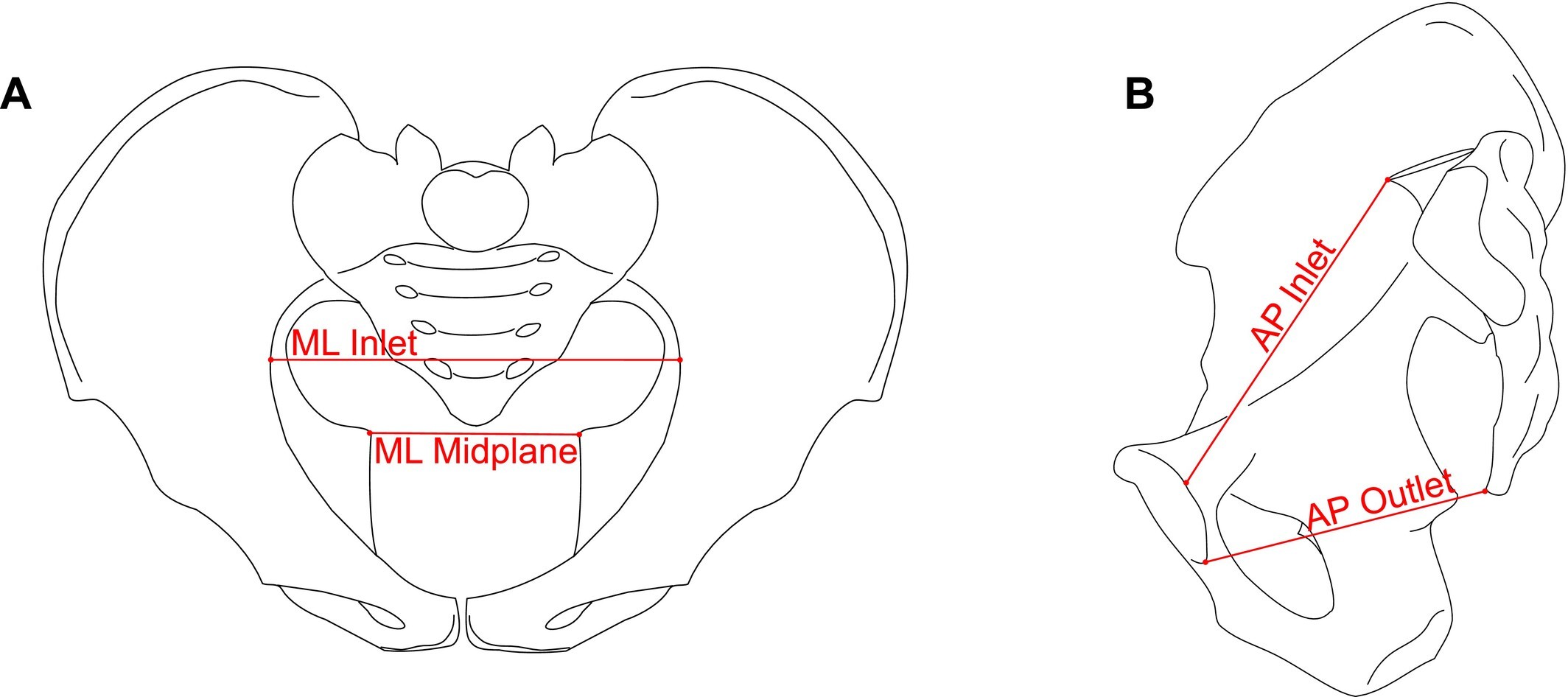
Dr. VanSickle led an article published in the journal, The Anatomical Record. In this study, the dimensions of the pelvic cavity were measured from CT scans in women and men representing three age groups: 15-34 years, 35-50 years, and over 51 years. In females, these ages correspond to "prime reproductive years", "advanced maternal age", and "likely post-menopause". Statistical analyses revealed that there were no significant differences between any paired age groups in males. In females, the only significant differences were between the oldest age group and each of the two younger age groups. We concluded that these results rejected the hypothesis that skeletal remodeling increased risks in advanced maternal age pregnancies. Our findings also suggest that the pelvis may widen post-menopause, which could increase the risks of pelvic floor dysfunction, though these results require additional study to confirm.
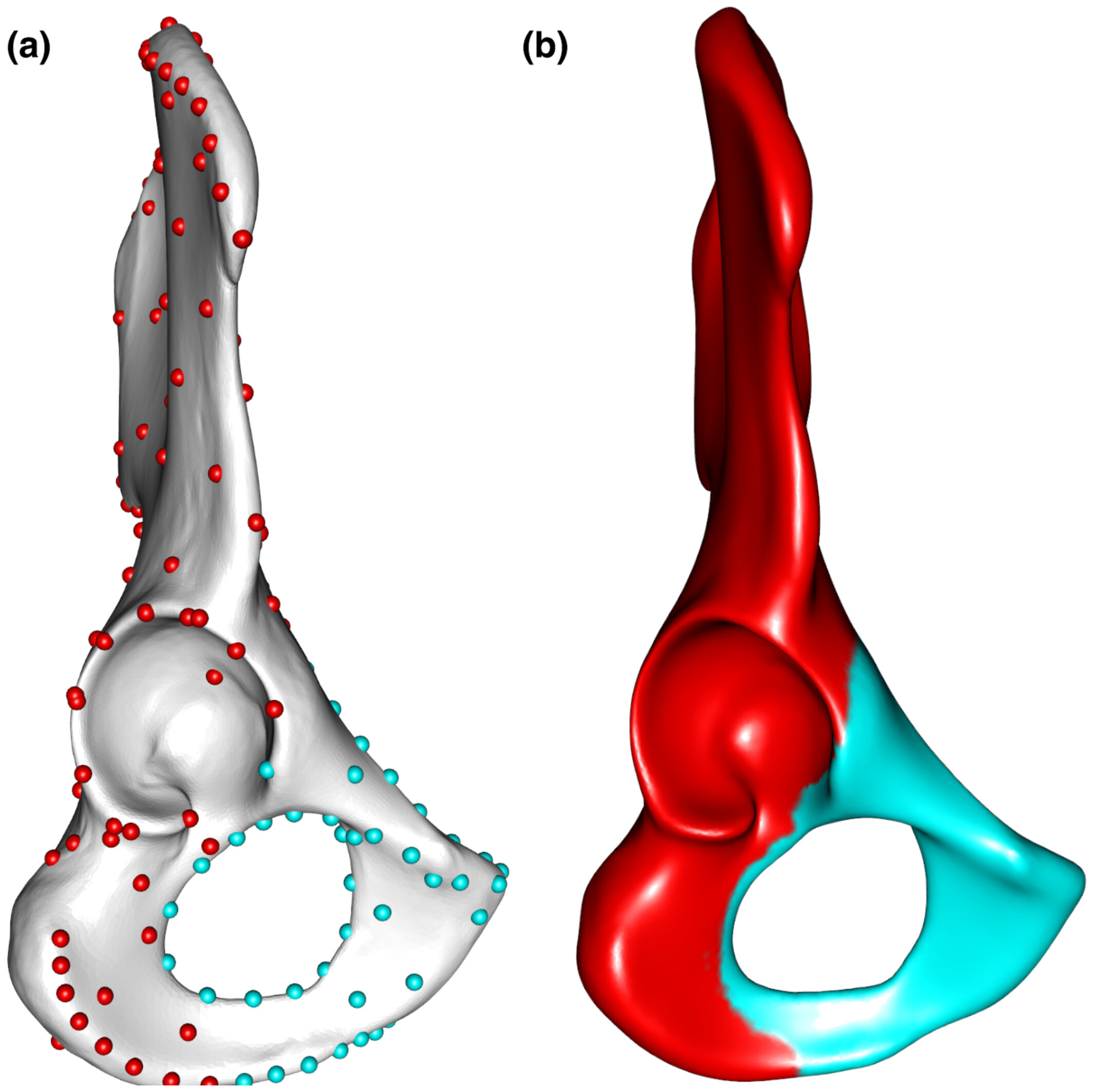
Image: In both hipbones, the red region is used to predict the teal region that is often absent in fossils.
Dr. VanSickle co-authored an article led by Dr. Torres-Tamayo and published in the journal, Methods in Ecology and Evolution. The manuscript describes a novel use of Statistical Shape Modeling (SSM) to use known pelvic landmarks on a large sample of humans, chimpanzees, and gorillas to predict absent pelvic landmarks in various hominin ancestors. Since the pelvis forms a bony ring, it is often crushed during taphonomic processes, yielding a fossil record limited to small fragments. Many questions involving the pelvis, such as how a species walked or gave birth, require complete hipbones for analysis, which are rarely preserved. This project presents the possibility of reconstructing absent anatomy using a robust and now validated methodology.
Dr. VanSickle co-authored an article led by Dr. Torres-Tamayo and published in the Journal of Human Evolution. The manuscript describes a fossilized partial hip bone from Spain that, based on its context at the site and anatomical attributes, is an adult male Neandertal. By comparing the El Sidrón fossil with other Neandertals and with earlier hominins, the team discovered that the El Sidrón hip bone shared more traits with earlier taxa than most Neandertals do. This discovery expands the range of pelvic variation possible in Neandertals and links them more closely with earlier fossils.
Dr. VanSickle was invited to represent the paleoanthropology perspective for a peer-reviewed article led by Drs. Wutich, Nelson, and DuBois and published in the American Journal of Biological Anthropology. In this article, the authors reviewed and discussed the ways in which Biological Anthropologists can and do use qualitative methodologies in their research. Dr. VanSickle's section focused on the history and descriptions of hominin fossils after their initial discovery, context that is essential for understanding how to interpret the fossil even when traditional quantitative techniques may not be possible.

Dr. VanSickle presented a podium talk with co-author Dr. Liese at the invited session, "The evolution of birth difficulties: interdisciplinary approaches to the 'obstetrical dilemma'" in Baltimore MD. This session was co-sponsored by the American Association of Biological Anthropologists and the Human Biology Association. Her talk focused on the history of the obstetrical dilemma debate within anthropology and how the lines between the two sides have blurred over time, rendering this framework for discussing the evolution of birth obsolete.
At the AABA conference, Dr. VanSickle was also a co-author on a podium presentation presented by lead author Dr. Torres-Tamayo entitled, "First description of a partial os coxae from El Sidrón (Asturias, Spain) reveals ancestral traits in Neanderthal pelvis morphology". This talk presented a Neandertal pelvic fossil from Spain that expands the range of variation for Neandertal pelvic traits.
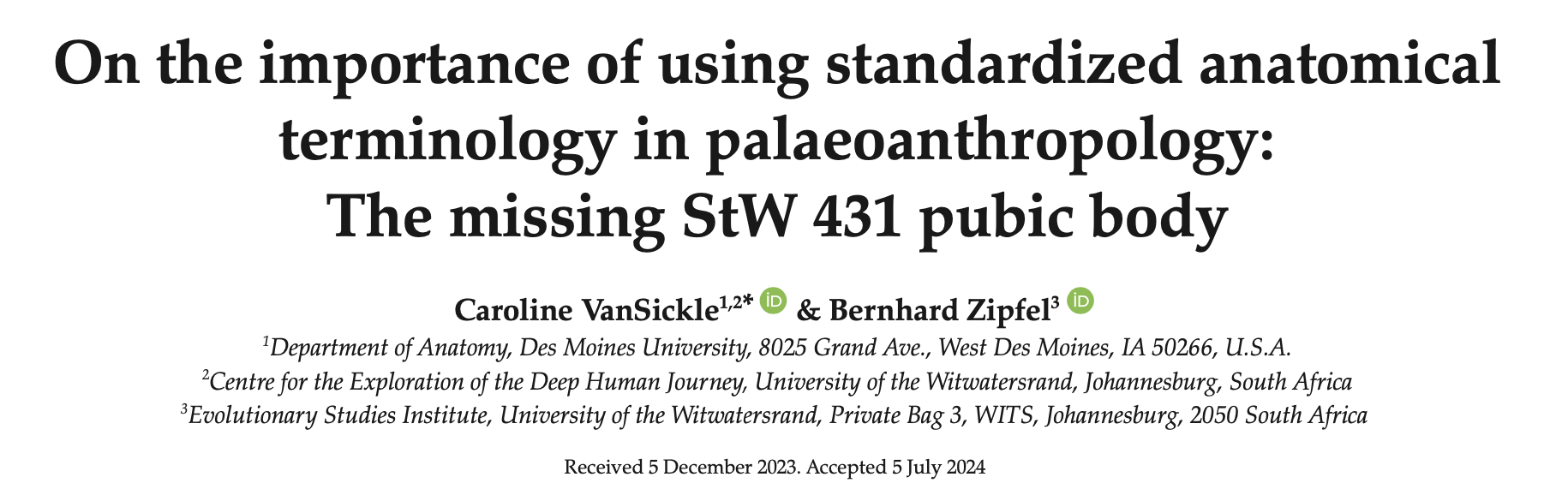
Dr. VanSickle and her co-author Dr. Zipfel published a peer-reviewed article that article critiques the application of non-human anatomical terminology to fossils of human ancestors, mixing Dr. VanSickle's interests in anatomy and evolution.
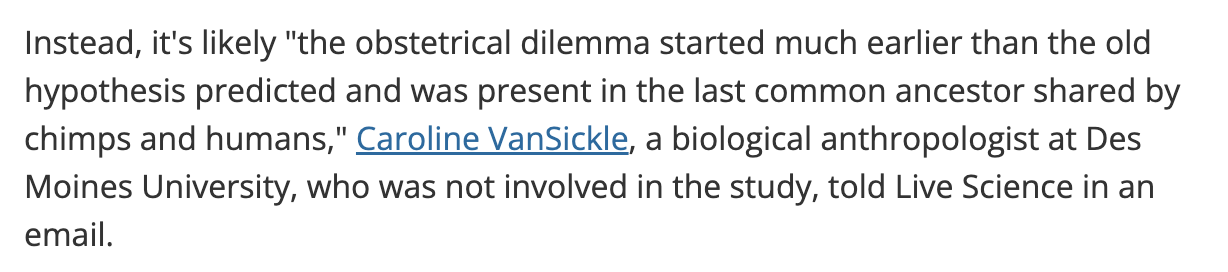
Dr. VanSickle was quoted for her expertise in the evolution of sex differences in the human pelvis in a LiveScience article. The news article reports on a recent study by Webb et al. that claimed pelvic sex differences are not unique to humans but exist in chimpanzees as well. Dr. VanSickle is quoted saying, "If true, anthropologists may have found an explanation for why some of our bipedal ancestors seemed to have a challenging time giving birth despite having small brains — they may have faced the same birthing challenges as that common ancestor shared with chimpanzees!"

Dr. VanSickle presented a poster at the European Society for the study of Human Evolution annual meetings in Zagreb, Croatia. Her poster, co-authored with researchers from the University of Zurich and the University of Freiburg, demonstrated how a newly developed Statistical Shape Modeling technique could be applied to reconstruct a fossil hip bone from South Africa. The hip bone, SK 3155b, has previously been assigned to the genus Paranthropus, a genus for which pelvic anatomy is largely unknown. This poster presented preliminary results of how the unknown pelvis of this species could be reconstructed for future study.
At the same conference, Dr. VanSickle was a co-author on a poster led by Dr. Schlager that described the Statistical Shape Modeling method in greater detail, demonstrating how it has been validated on other hominin fossils where more anatomy is preserved.
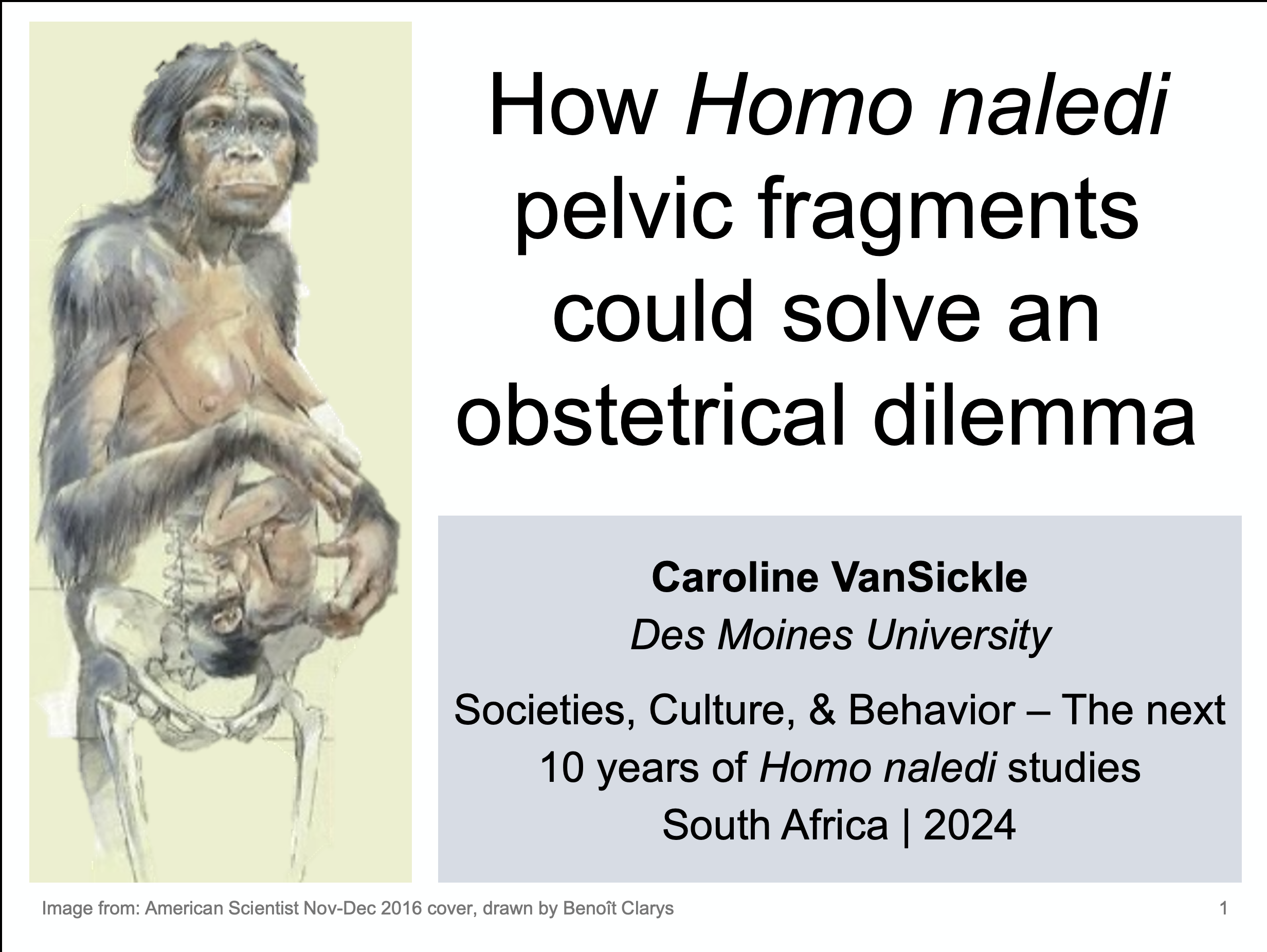
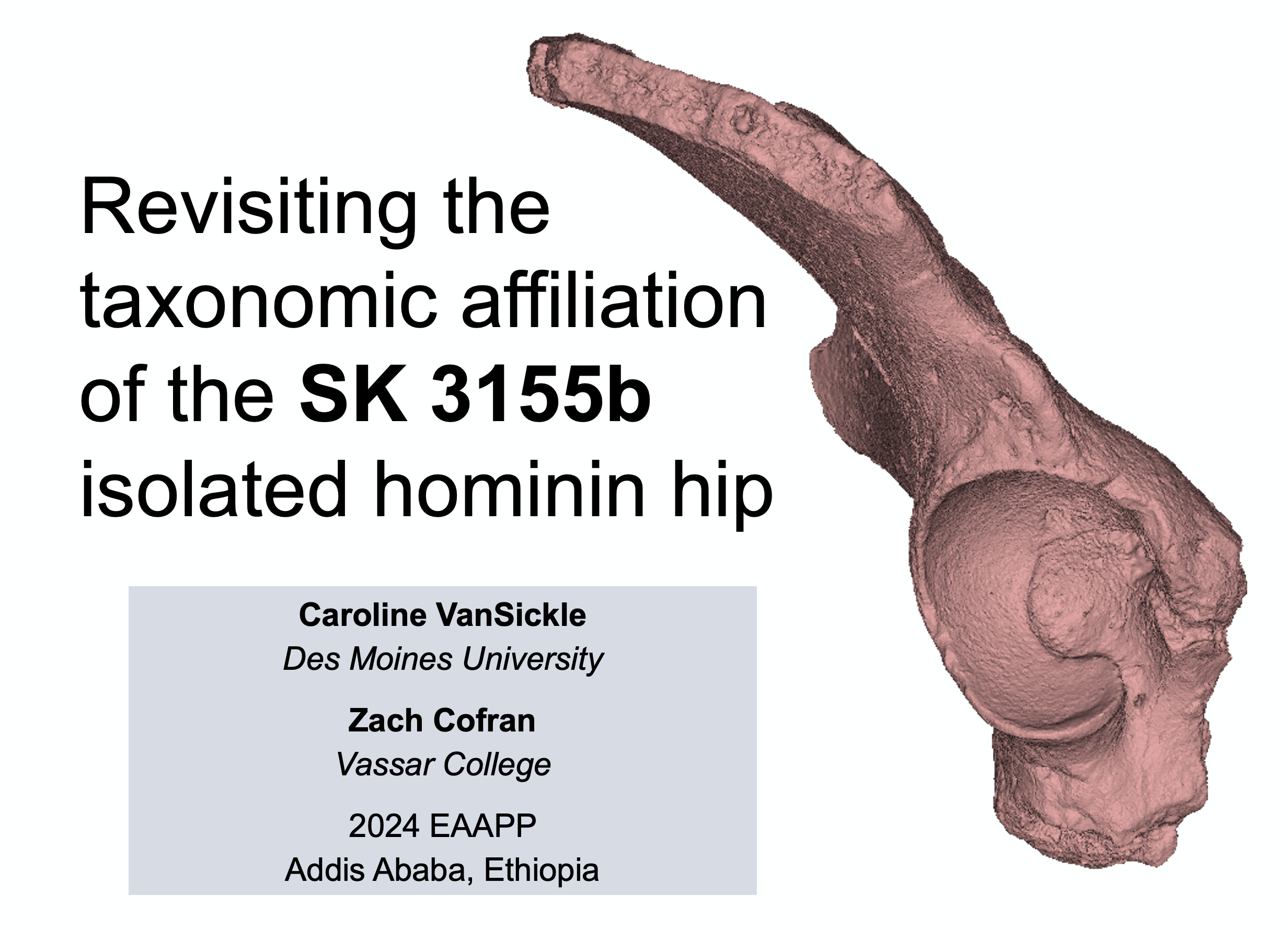
Dr. VanSickle presented a podium talk at the Eastern African Association of Palaeoanthropology and Palaeontology (EAAPP) meetings in Addis Ababa, Ethiopia. Her talk focused on a fossil hipbone discovered in 1974 in South Africa. She and her co-author, Dr. Cofran, re-evaluated the hip in light of more recent discoveries, demonstrating that traditional comparative methods do a poor job distinguishing the multiple hominin species present in South Africa ~2 million years ago.
Two Des Moines University Medicine and Health Sciences researchers are helping unravel one of the most intriguing mysteries in human evolution. New findings from the ongoing Homo naledi project suggest that all 20 fossil individuals from a cave in ...
August, 05 2026 - Verified by Des Moines University Medicine and Health Sciences
Big ideas. Bold research. Bright futures. Caroline VanSickle, PhD, and over 50 students presented at the 2026 Research Colloquium at Des Moines University Medicine and Health Sciences in April. DM...
April, 29 2026 - Verified by Des Moines University Medicine and Health Sciences