
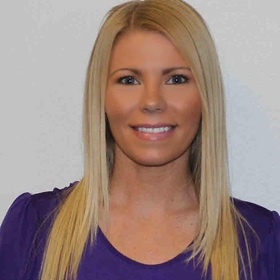
Nicole Tanguay
Member of The Honor Society of Phi Kappa Phi
From Las Vegas, Nevada
From Las Vegas, Nevada
Nicole's goal is to promote transformational change in the lives of those who need help in the areas of addiction, anxiety, depression, trauma, relationship issues, interpersonal difficulties and a variety of life stressors. Nicole is currently credentialed as a Qualified Behavioral Aide (QBA) and Registered Alcohol and Drug Technician (RADT). She graduated from University of Nevada, Las Vegas in May 2023 with a Master's Degree in Clinical Mental Health Counseling in order to become licensed as a Clinical Professional Counselor (CPC). Nicole also earned an Advanced Graduate Certificate in Addictions Studies which will allow her to become duly licensed as a Licensed Clinical Alcohol and Drug Counselor (LCADC). Through rigorous studying and hands-on clinical experience, she has crafted her own therapeutic philosophy based on an integrated approach that involves healing the whole person - mind, body and soul. As a counselor and coach, she operates from a wellness perspective and believes that it is important to address all eight dimensions of wellness in order to help her clients build a holistic sense of wellness and fulfillment in their lives. Through the use of theories such as person-centered therapy, cognitive behavioral therapy, solution-focused therapy and mindfulness based approaches such as dialectical behavior therapy, she assists her clients in their journey to rediscovering their power, potential and purpose in life. Along with her counseling background, Nicole is also certified through the National Academy of Sports Medicine as a Certified Personal Trainer, Nutrition Coach, Behavior Change Specialist, Group Fitness Instructor, and specializes in Women's Fitness. Nicole believes that all people have the potential for good, and that people have the capacity to resolve their own problems with assistance. She believes that life is a journey which involves growth and healing through the development of a healthy mind and body. Her goal is to help her clients achieve greater independence in their life by promoting self-discovery and assisting them in understanding how their mind, body and spirit are all connected and then using that knowledge in order to heal and achieve overall health and wellness.
Nicole Tanguay Inducted into The Honor Society of Phi Kappa Phi
Nicole Tanguay of Las Vegas, Nevada, was recently initiated into The Honor Society of Phi Kappa Phi, the nation's oldest and most selective all-discipline collegiate honor society. Tanguay was ini...
April, 05 2022 - Verified by The Honor Society of Phi Kappa Phi
Nicole Tanguay was recognized for graduating
The Post-Graduate Career Pathways program is a year-long professional development program designed to help graduate and professional students explore and prepare for a variety of career options and prepare them for workforce readiness and career success. Students participate in workshops and panels led by industry experts, attend a one-on-one goal-setting meeting and a one-day job shadowing with an assigned employer, meet with a career counselor to have their resume reviewed, complete a mock interview, and more.
Fall 2022 - Spring 2023 -
Added by Nicole
Nicole Tanguay was recognized for earning an academic award
Graduate College Medallion Recipient for Spring 2023 Graduation - This program celebrates graduate and professional students commitments to being both involved and engaged with the wider campus community. Through participation in Graduate College sponsored programs, events, and professional development opportunities, students become strong, collaborative leaders at the university and beyond.
Link to Announcement: https://www.unlv.edu/announcement/graduate-college/spring-2023-graduate-college-medallion-recipients
Fall 2022 - Spring 2023 -
Added by Nicole
Nicole Tanguay was recognized for graduating
Con-Current Master's Advanced Graduate Certificate in Addiction Studies
Fall 2022 - Spring 2023 -
Added by Nicole
Nicole Tanguay was recognized for earning an academic award
Completion of three Financial Literacy and Wellness badges through the UNLV Graduate college. Upon completion, was accepted into the Financial Literacy and Wellness Certification program, which included a culminating experience and presentation of research.
Summer 2022 -
Added by Nicole
Nicole Tanguay was recognized for graduating
The Graduate Financial Literacy & Wellness Certification (GFLWC) is a professional development program that provides graduate students with the skills and knowledge necessary to plan for their future financial success. The Graduate Colleges research- and expert-informed content helps participants learn about financial topics, steps they can take to improve their current financial situation, and how to create a future with minimal financial anxiety and stress. Students that have completed two Financial Literacy & Wellness Badges are invited to join the program. Once accepted into the program, participants must attend two mandatory cohort meetings, attend a Goals Coaching Session, and complete a Culminating Experience.
Spring 2022 - Summer 2022 -
Added by Nicole
Nicole Tanguay was recognized for earning an academic award
Graduated with an overall cumulative GPA of 3.67, and made the Dean's List four semesters in a row.
Added by Nicole
Nicole Tanguay was recognized for graduating
Nicole graduated with high honors and completed her Master's Degree in Clinical Mental Health Counseling and a concurrent Advanced Graduate Certificate in Addiction Studies on May 12, 2023 from University of Nevada, Las Vegas.
Added by Nicole
Nicole Tanguay was recognized for earning an academic award
Won 3rd place in the 9th Annual Rebel Grad Slam 3MT Thesis Competition at the University of Nevada, Las Vegas for her Master's Thesis on Women, Trauma and Incarceration: An Ethnographic Study.
Added by Nicole
UNLV Graduate Rebel Ambassador
Grad Rebel Ambassadors are highly visible members of the Graduate College team, helping build a strong graduate student community and strengthen ties between the Graduate College, alumni, and community members. Participants strengthen their leadership, communication, and networking skills while advocating on behalf of graduate education. In November 2022, Nicole presented her thesis and research on Women, Trauma and Incarceration - An Ethnographic Study and won 3rd place in the finals.
Fall 2022 - Spring 2023
-
University of Nevada: Las Vegas
Added by Nicole
Chi Sigma Iota Honor Society
CSI is an international honor society that values academic and professional excellence in counseling. We promote a strong professional identity through members (professional counselors, counselor educators, and students) who contribute to the realization of a healthy society by fostering wellness and human dignity. Served as an Executive Board member for the 2022-2023 school year.
Spring 2021 - Spring 2023
-
University of Nevada: Las Vegas
Added by Nicole

Dialectical Behavior Therapy for Substance Use Disorders (Group Counseling Proposal)
Although Dialectical Behavior Therapy (DBT) was originally designed to help treat individuals with multiple and severe psychological disorders, DBT has also expanded to be used with individuals with substance use disorders. According to Dimeff & Linehan (2008), “DBT for substance abusers incorporates concepts and modalities designed to promote abstinence and to reduce the length and adverse impact of relapses” (p. 39). When DBT is administered successfully, clients are able to “envision, articulate, pursue, and sustain goals that are independent of his or her history of out-of-control behavior, including substance abuse” (Dimeff & Linehan, 2008, p. 39). This proposal was designed by Nicole Tanguay for a DBT-SUD group therapy experience consisting of 10 sessions at 90 minutes each, focusing on the four pillars of DBT - mindfulness, emotion regulation, distress tolerance and interpersonal effectiveness.
May 2022 -
Others
Assisting Ex-Offenders with Career Development (Career Intervention Proposal)
Returning home after being in prison is a very challenging transition for most newly-released prisoners, as well as their families and communities. Recidivism studies show that without intervention, two-thirds of those released will return to prison within three years. Sadly, prisoners often go back to prison not because they committed a crime, but because they don’t have the proper support and resources needed to become a productive member of society (Prison Fellowship.org, 2022). Research indicates that prisoners reentering the community are often undereducated, have little or no prior work history, lack vocational skills, have histories of substance abuse, and are more likely to suffer from mental illness (Troshynski et al., 2019). Furthermore, the experience of being an “ex-con” with a criminal record presents a myriad of barriers unique to individuals post-release. These include difficulties in finding and securing employment as well as suitable housing (Pager, 2003).
Although employment has been a traditional measure of success after exiting prison, it is only one aspect of successful transformational change. Reestablishing social relationships, providing child support, finding stable housing, and accessing other programs (e.g., educational programming, substance abuse, counseling, etc.) are also important components of successful reentry (Troshynski et al., 2019). Prior research has found that employment in vocational programs can lower the risk of reoffending (Rossman & Roman, 2003) and that, particularly for offenders aged 25 and older, stable employment is effective at reducing re-offense rates overall (Uggen, 2000). Therefore, individuals returning home to communities without a range of services or employment opportunities are at an even greater risk of re-offending. Due to these statistics, it is important to create a program that newly released offenders can have access to in order to help them properly transition back into society.
May 2022 -
Research Projects
Understanding Exercise Addiction
It is well known to most that regular physical activity and exercise plays an important role in overall health and wellness as well as disease prevention. In fact, the media often portrays exercise as beneficial, and the idea of being slim as healthy. However, individuals who exercise excessively have an increased potential of experiencing adverse side effects on both a physical and mental health level. It is important to understand that excessive physical exercise fits the typical and one of the most common addictions within the behavioral addictions category. Although, exercising excessively does not necessarily indicate an addiction. Exercise addiction is a serious psychological condition that should be understood and recognized by therapists. Although exercise addiction is one of several behavioral addictions that have not been designated as an addictive disorder in the Diagnostic and Statistical Manual of Mental Disorders (DSM-5), in order for an individual to be treated with an addiction to exercise, specific diagnostic criteria must be met, which will be discussed in this paper. There is currently an ongoing debate as to whether or not exercise addiction should be categorized in the DSM-5, and this is mainly due to lack of evidence about the nature of this behavioral addiction. What is important to understand that individuals who suffer from exercise addiction or dependence do not simply exercise a lot, or use it as a coping mechanism for some other addiction, but truly feel unable to stop exercising, despite negative consequences. They suffer both physically and psychologically when unable to continue their exercise regime. Symptoms of other mental disorders are commonly present in individuals with addictive disorders. There are other prevalent co-occurring disorders present with exercise addiction, which will are discussed in this research paper, as well as treatment methods and interventions for exercise addiction and co-occurring mental illness and other behavioral disorders present.
November 2021 -
Research Projects
Women, Trauma and Incarceration
Trauma affects the whole person, and the impacts can be multiple, broad and diverse. Its impact extends to family, the community, health care and social systems, and society overall. Rarely is trauma discussed in relation to incarceration. This is particularly troublesome due to the fact that women are considered to be the fastest growing incarcerated population in the United States. Incarcerated women report high rates of physical, sexual and emotional abuse during both their formative years and adulthood, higher rates of mental illness and addiction problems (Wolff et al., 2012). As the population of women who are incarcerated continues to grow, so does the need to address trauma and victimization using a gender-responsive, trauma-informed approach in correctional institutions. For women entering the criminal justice system, there is a high prevalence of comorbid post-traumatic stress disorder (PTSD) and substance use disorder (SUD). However, most correctional institutions lack the awareness and understanding of how to treat both disorders simultaneously. Due to the high rates of traumatic experiences experienced by women who are incarcerated and the co-occurring diagnosis of PTSD and SUD, a call for interventions that target all three of these issues in an integrated manner are most appropriate for long-term recovery. In this paper, an integrated treatment model to treating incarcerated women with co-occurring PTSD and SUD will be discussed, with an emphasis on a three stage approach to treatment with specific cognitive-behavioral interventions as the focus. Programming in jails and prisons needs to include a strengths-based framework that is grounded in an understanding of and response to the impact of trauma on the whole woman, including physical, psychological and emotional effects in order to be most effective in treating this population.
April 2021 -
Research Projects
Addressing Religious Value Conflicts in Counseling
In the helping profession of clinical mental health counseling, counselors must have the ability to work with a wide range of clients with diverse worldviews and values. Clients often come to therapy in search of a safe place to share their struggles in an effort to overcome any burdens they may be experiencing. Knowing this, it is important for the counselor to manage their personal values and beliefs and have the ability to properly bracket them when entering into a session where a client’s values differ from their own. The imposition of values by the counselor is an ethical issue that can and should be avoided if the counselor develops proper education and training in addressing value-based conflicts. Religious-based value conflicts can arise when a counselor’s religious beliefs differ from that of the client, or when the counselor’s religious beliefs and values conflict with the client’s presenting problem and the counselor feels that he or she is unable to properly help the client due to this conflict. There has been a growing number of legal and ethical cases that have involved religious-based value conflicts between counselors, counselors-in-training, and their clients. As a result of these cases, there has been a great deal of discussion regarding the issue of whether counselors can use their religious beliefs as the basis for referring LGBTQ (Lesbian, Gay, Bi-Sexual, Transexual, Questioning) clients as well as the broader scope of whether referrals based on value conflicts are ever ethically appropriate. In this paper, I will be addressing and analyzing various peer-review articles that discuss this subject of religious-based value conflicts; including the role of spiritual and religious values in counseling, legal and ethical implications of using religious beliefs as the basis for refusing to counsel certain clients, affirmative counseling practices in regard to religious value conflicts and the idea of reconciling conflicts between counselor’s beliefs and affirming the LGBQT community as a whole.
February 2021 -
Research Projects
Child Self-Emancipation in Play Therapy
The play therapy room is a therapeutic environment that a child can enter into that is not branded and is neutral in nature. Unlike the real world, the play therapy room is the only space in the world that provides a child with nearly limitless power to control and manipulate their world the way they want it to be. Once a child engages in play, they have the ability to act out forms of oppression, privilege, and various isms, but also work through these issues and overcome them. Through their engagement, they find ways to solve forms of oppression and privilege, and most of it is self-guided. As children play, the therapist acts as a mirror so children can use their imaginations to explore different aspects of themselves, different ways to build relationships, different methods for solving problems, different attitudes and perspectives and different ways of being in the world. When children are beginning to find these solutions, they have the outcome of increased self-esteem, a better positive identity and an increase in their academic inclination, to name a few. Being aware of social injustice and implicit biases present in children is important for the therapist to recognize because this can affect the child in the playroom environment. Also, multicultural competency is increasingly viewed as important in the playroom because culturally sensitive counseling is important when supporting the child towards self-emancipation. This paper highlights that child self-emancipation is possible in the play therapy room through the power structure that exists between therapist and child, the freedom of self-expression provided in the playroom by a multiculturally competent counselor, the inclusion of specific types of toys, and culturally sensitive interventions the therapist provides. The child-centered play therapy room provides a space where a child can resolve any gaps between their authentic self and the self that is created by the attitude and values of others in the world.
November 2020 -
Research Projects
