
Sign In or Use Email

Sean Henley

Majored in Chemical Engineering, Chemistry, Minored in Materials Engineering, Pre-Law
Clarkson University, Class of 2027
From Palmyra, NY
I am currently in my final year at Clarkson, pursuing a B.S. in Chemical engineering with a minor in materials engineering. Previous to attending Clarkson I attended SUNY Potsdam where I ran D3 track and field, conducted research with Dr. Fadi Bou-Abdallah which resulted in the publication of two papers, and completing the course requirements for a B.A. in Chemistry. Besides my work as an undergraduate scientist, I have also had the pleasure of being a product development and formulations engineering intern at Eastman Kodak. After graduating from Clarkson, I plan on pursuing a career in industry.
Merit logo.Follow Sean

Sean C. Henley of Palmyra, NY, has been named to Clarkson University's Dean's List

Sean C. Henley of Palmyra, NY, a junior majoring in chemical engineering, was named to the Dean's List for the Spring 2026 semester at Clarkson University. Dean's List students must achieve a minim...

June, 04 2026 - Verified by Clarkson University
Sean Henley Set to Graduate from SUNY Potsdam

Sean Henley of Palmyra, NY, is set to graduate cum laude from SUNY Potsdam with a Bachelor of Arts degree in Chemistry. The State University of New York at Potsdam will honor Sean and the other ca...

May, 11 2026 - Verified by SUNY Potsdam
SUNY Potsdam Announces Significant Expansion of Highly Successful Student Retention, Graduation Support Program: ACE

SUNY Potsdam leaders announced the expansion of the campus's Advancing Completion through Engagement (ACE) initiative in an event held yesterday along with State Assemblymember Scott Gray. This expansion will mean that 250 students at Potsdam will rece...

September, 30 2025 - Verified by SUNY Potsdam
SUNY Potsdam Honors Winners of 2025 Learning and Research Fair Awards

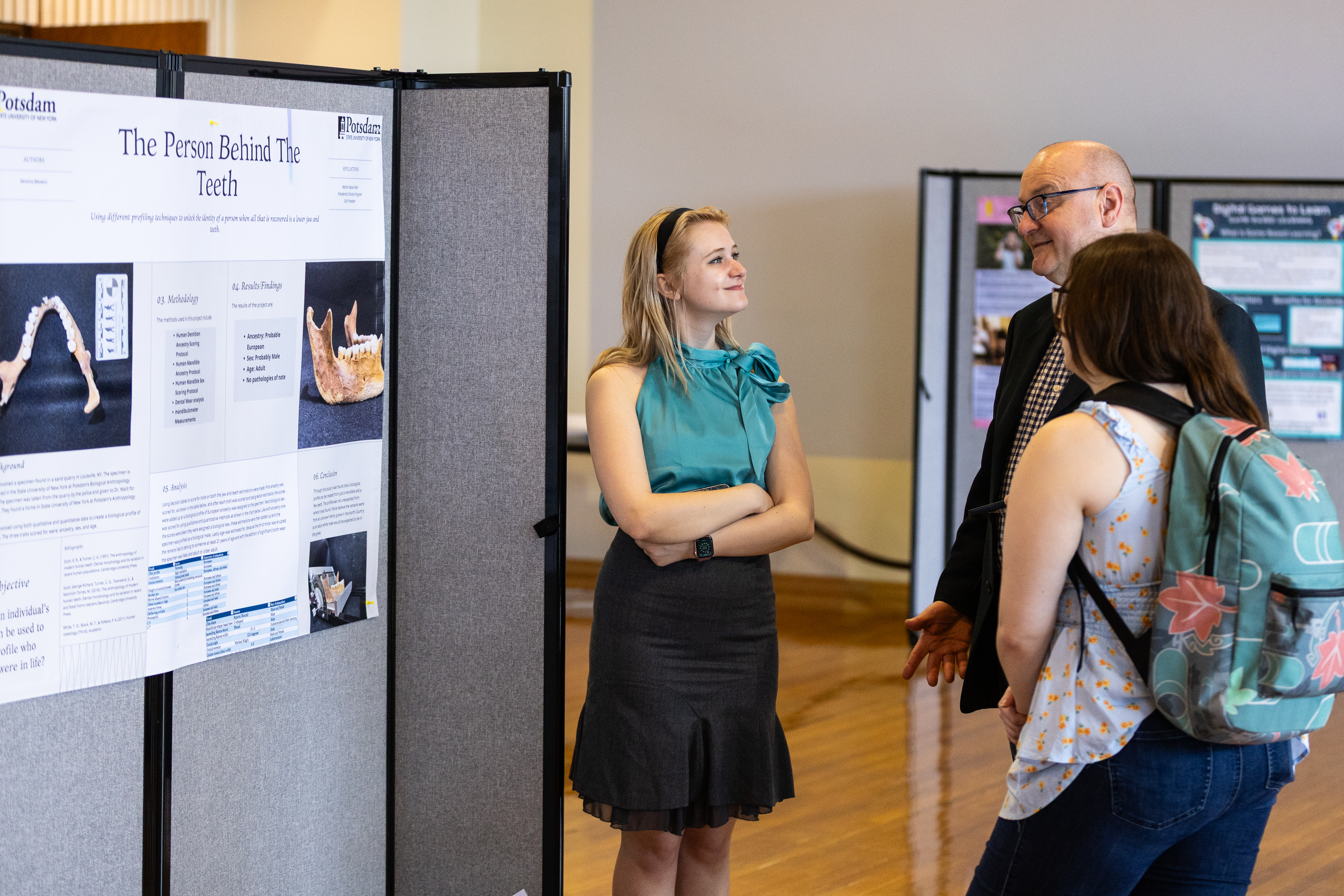
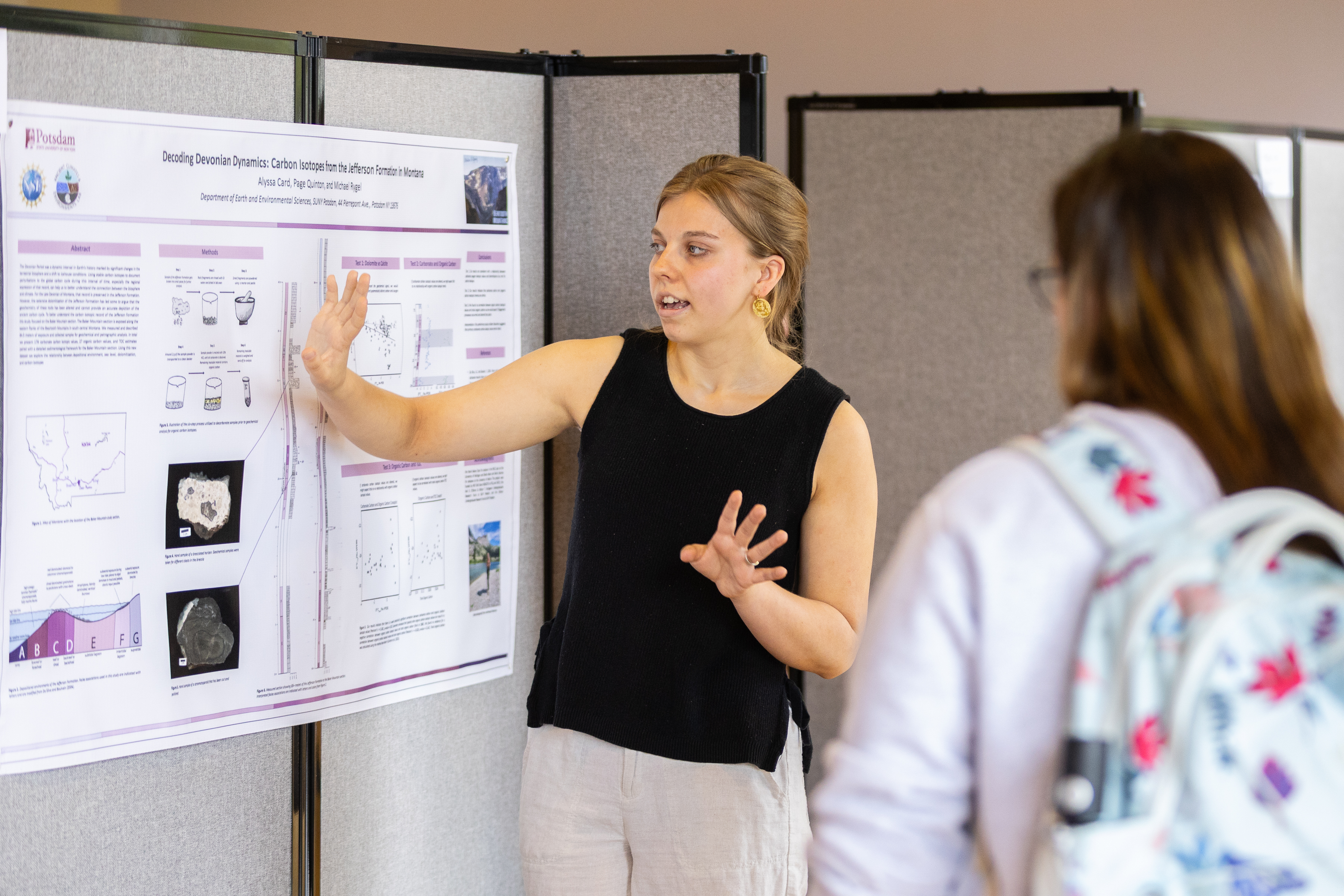
SUNY Potsdam recognized students and faculty mentors for excellence in research and creative projects, following the College's 2025 Learning and Research Fair. More than 50 students presented their research to faculty, staff and classmates in the Barr...

May, 13 2025 - Verified by SUNY Potsdam
SUNY Potsdam athlete Sean Henley named to SUNYAC Commissioner's Academic Honor Roll for 2023-24 season

Sean Henley, a resident of Palmyra, N.Y. was one of 141 SUNY Potsdam student-athletes to earn a spot on the State University of New York Athletic Conference (SUNYAC) Commissioner's Academic Honor R...

June, 21 2024 - Verified by SUNY Potsdam
Sean Henley Named to SUNY Potsdam President's List

Sean Henley of Palmyra, NY, was recently named to the President's List at The State University of New York at Potsdam. Henley, whose major is History, was among 727 students who were honored for a...

June, 11 2024 - Verified by SUNY Potsdam
Sean Henley Named to SUNY Potsdam President's List

Sean Henley of Palmyra, NY, was recently named to the President's List at The State University of New York at Potsdam. Henley, whose major is History, was among 809 students who were honored for a...

January, 16 2024 - Verified by SUNY Potsdam
Chemical Engineer Intern at Kodak

Development of structure/property relationships for new adhesive interlayers used in inkjet packaging applications. Including formulation, coating and physical characterization of materials and adhesive performance. Supporting the current production of an optical film used in printing and characterizing the drying process for a new coating solvent.


May 2026 - August 2026
Multivalent recognition of ferritin by full-length NCOA4 enables robust ferritinophagy
Assisted with experiments, and collection of data for publication.
April 2026 - Publications
Ferritin Recognition by NCOA4 Enables Robust Ferritinophagy
purification of the full length NCOA4 protein, role of ferritinophagy in iron homeostasis, NCOA4 FL binding to ferritin to facilitate ferritinophagy.
April 2026 - Presentations
Ferritin iron uptake and oxidation are dynamically modulated by nucleotide phosphate architecture via electrostatic gating
Ferritin safeguards cells from iron-induced oxidative stress by oxidizing and storing Fe2+ within its nanocage, yet how its macromolecular architecture enables responsiveness to the cellular chemical environment remains unclear. Here, we show that ferritin's iron-oxidation activity is modulated by an electrostatic gating mechanism centered at its 3-fold channels and sensitive to solution charge conditions representative of intracellular metabolites. At physiologically relevant nucleotide concentrations, ferritin-catalyzed Fe2+ oxidation is strongly attenuated in the presence of triphosphate nucleotides, while diphosphates and monophosphates exert progressively weaker effects, indicating that ferritin responds selectively to the charge density and geometry of the phosphate chain, rather than nucleotide identity. High-resolution cryo-electron microscopy identifies condition-dependent differences in non-protein density within and near the ferritin 3-fold channels, consistent with changes in the local solvent and/or ion environment, rather than discrete ligand binding. Fluorescence and calorimetric measurements reveal weak, reversible nucleotide association (KD ∼ 1 mM), supporting a low-affinity, dynamic electrostatic interaction mode. The inhibitory trend persists under reduced oxygen conditions and across ferritin assemblies with varying H/L composition, supporting physiological relevance across cellular oxygen tensions and native ferritin heteropolymers. Ferritin activity is similarly modulated in bacterial, yeast, and human cell lysates under near-physiological conditions, demonstrating the robustness of this behavior in complex environments. Together, these findings establish ferritin as a biological macromolecule whose intrinsic channel electrostatics enable reversible modulation of iron uptake and oxidation in response to its chemical environment.
March 2026 - Publications
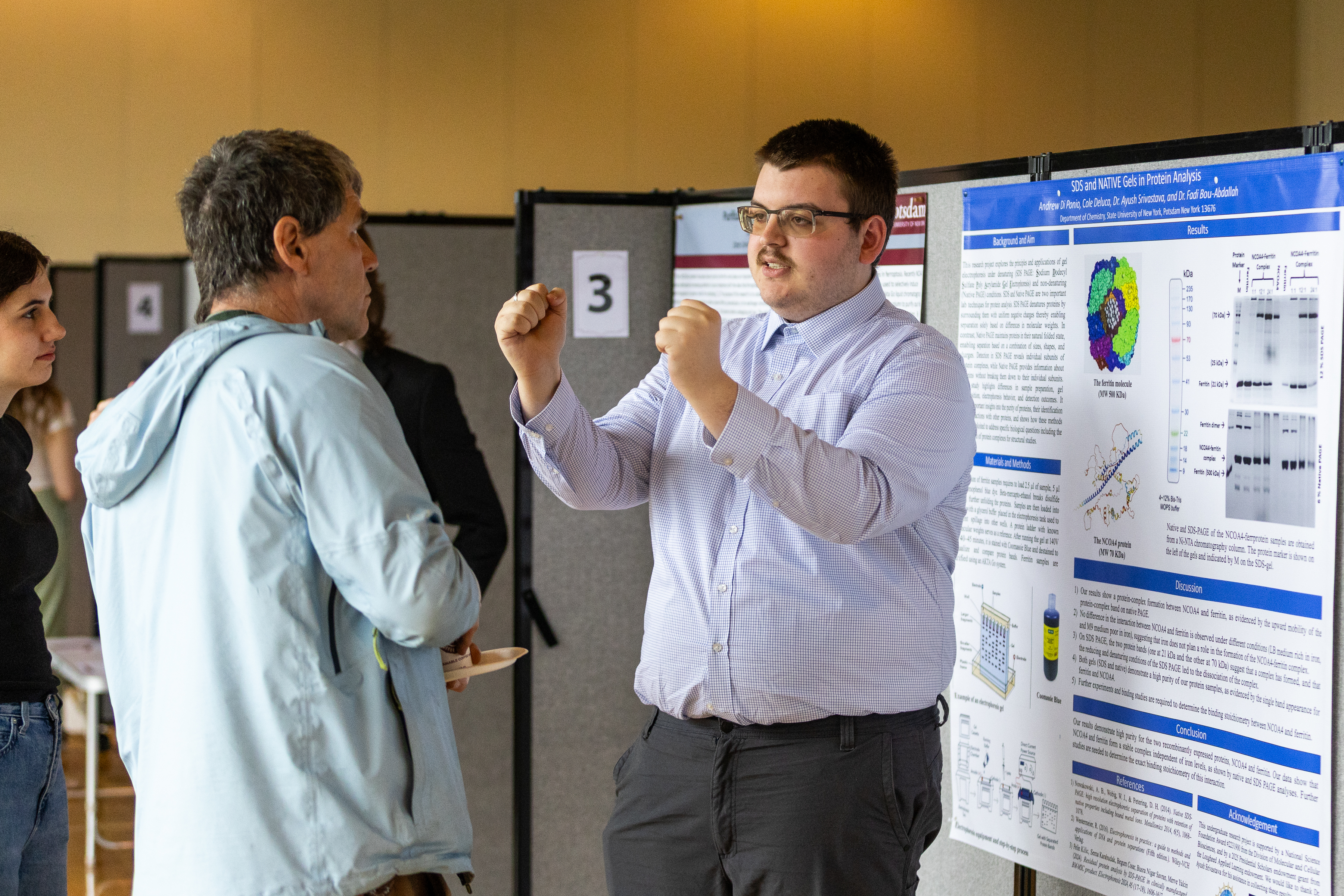
Purification of the NCOA4 protein via liquid chromatography
The NCOA4 protein has been shown to play an important role in Ferritinophagy, a form of autophagy, where NCOA4 acts as a cargo receptor and participates in ferroptosis. Recently NCOA4 has attracted increasing attention in cancer treatment with the idea that ferroptosis modulation via NCOA4 could be a potential treatment for some cancers. Ideally NCOA4 could be used to selectively induce ferroptosis in cancer cells effectively targeting exclusively cancer cells for autophagy. The purpose of this research is to develop a method of isolation and purification to obtain a pure NCOA4 protein via liquid chromatography. To achieve this, an Akta Go liquid chromatography instrument can be used to perform either protein affinity, size exclusion, or ion exchange chromatography experiments. In this research project we use primarily protein affinity with a His-Trap column to purify our His-Tag NCOA4 protein. The eluted fractions are then run on an SDS-PAGE gel to determine purity and confirm the presence of our protein.
April 2025 - Research Projects

President's List 2 Sports Commencement Dean's List

© Copyright 2026 • Merit Pages, Inc.Terms of ServicePrivacy Policy